
Leadership & Strategy
The Clarity Tax: Why Vague Orders Kill Performance. Every unclear directive you give your team costs you twice, once in confusion, and once in the follow-up you'll need to do to fix what they misunderstood. The most expensive leadership habit is the one that feels like flexibility.

Daniel Dopler
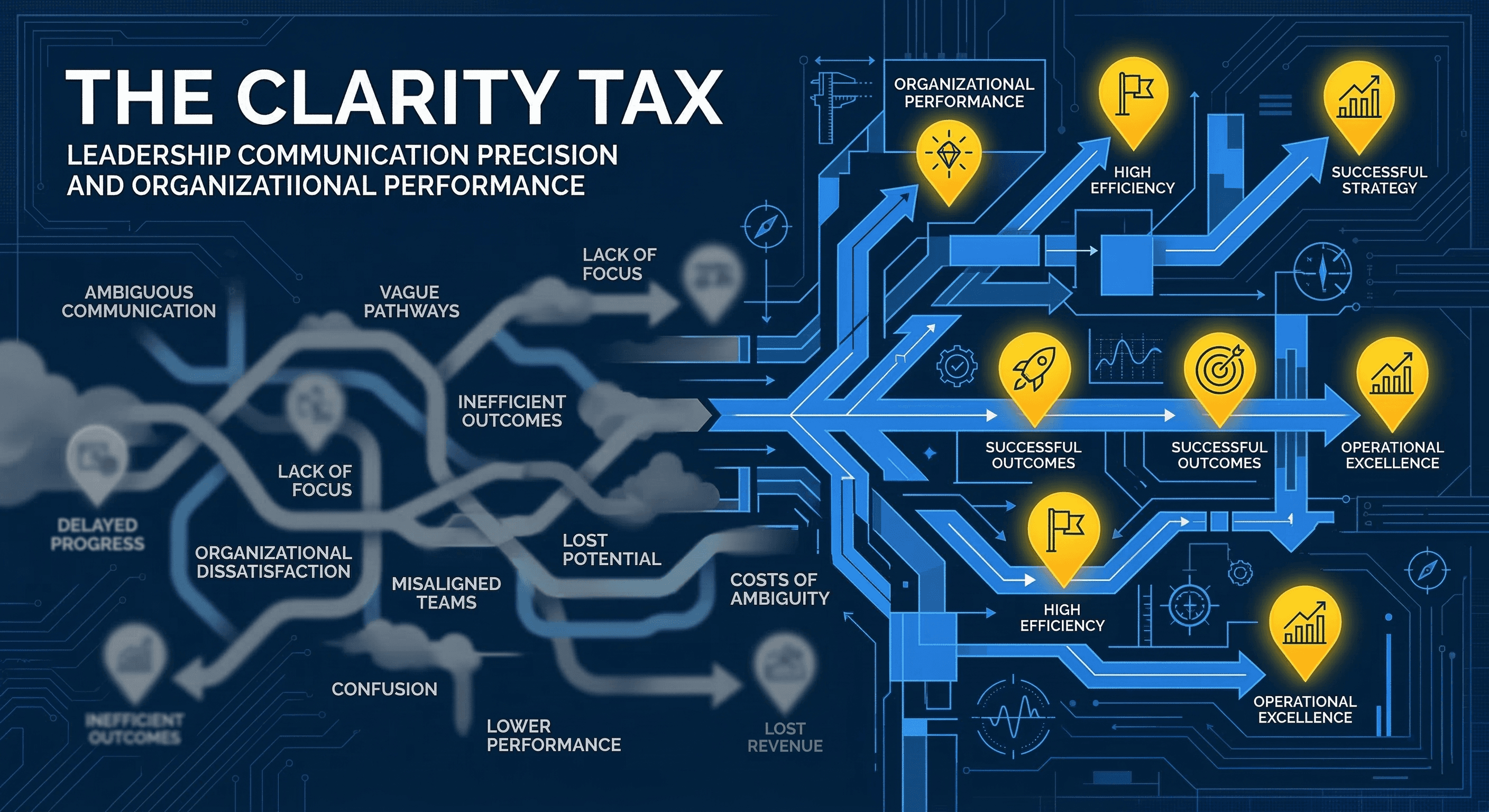
The Clarity Tax: Why Vague Orders Kill Performance
There is a tax on vague leadership, and your team pays it.
Every time you give an unclear directive, your team spends time interpreting what you meant. Some of them will interpret it correctly. Some won't. You'll find out which when the work comes back, and by then the cost of correction is higher than the cost of clarity would have been.
I call this the Clarity Tax. Most leaders pay it constantly without recognizing it as a cost of their own creation.
Where Vague Orders Come From
Vague orders come from three places. The first is leaders who haven't thought through what they actually want; they're delegating the thinking as well as the task. The second is leaders who are afraid to commit to a specific outcome because commitment creates accountability. The third is leaders who confuse brevity with clarity. "Handle it" is brief. It is not clear.
In EOD, vague orders are operationally dangerous. The environment doesn't tolerate ambiguity about who is responsible for what, what the acceptable outcome is, and what happens if conditions change. We developed Commander's Intent as a doctrine precisely because we needed our people to understand the purpose of an order, not just its literal content.
The civilian equivalent exists in the best organizations I've worked with. The worst organizations substitute activity for direction and wonder why output is inconsistent.
The Three Elements of a Clear Directive
Over twenty years, I've distilled clear direction to three elements: the outcome, the constraint, and the authority.
The outcome is what success looks like, not the task, but the result. "Write the report" is a task. "Have a two-page executive summary ready for the Thursday brief that lets leadership make a go/no-go decision on the pilot program" is an outcome.
The constraint is what can't be compromised. Time, budget, personnel, quality threshold, and downstream dependencies. Stating constraints explicitly prevents the second most common execution failure: technically completing the task while violating a constraint that was obvious to you and invisible to your team.
The authority is who can make what decisions without coming back to you. Nothing kills execution speed faster than unclear approval chains. If your team has to interrupt work to get your sign-off on decisions you'd approve 95% of the time, you've become a bottleneck in your own operation.
The Clarity Audit
Once a quarter, I audit my own directive-giving. I pull a sample of the directives I've given and ask: Does this have a stated outcome? Does this have stated constraints? Does this make clear what my team can decide without me?
Most leaders who do this exercise find that fewer than half of their directives contain all three elements. That gap is the Clarity Tax, and it compounds over time.
The leaders who scale well are the ones whose teams can execute confidently without constant access to the leader. That capability is built on clarity, not on talent alone.