
Leadership & Strategy
The $15 Million Question: Consolidating Training Without Sacrificing Quality Multiple times per year, I watched elite EOD teams travel from San Diego...
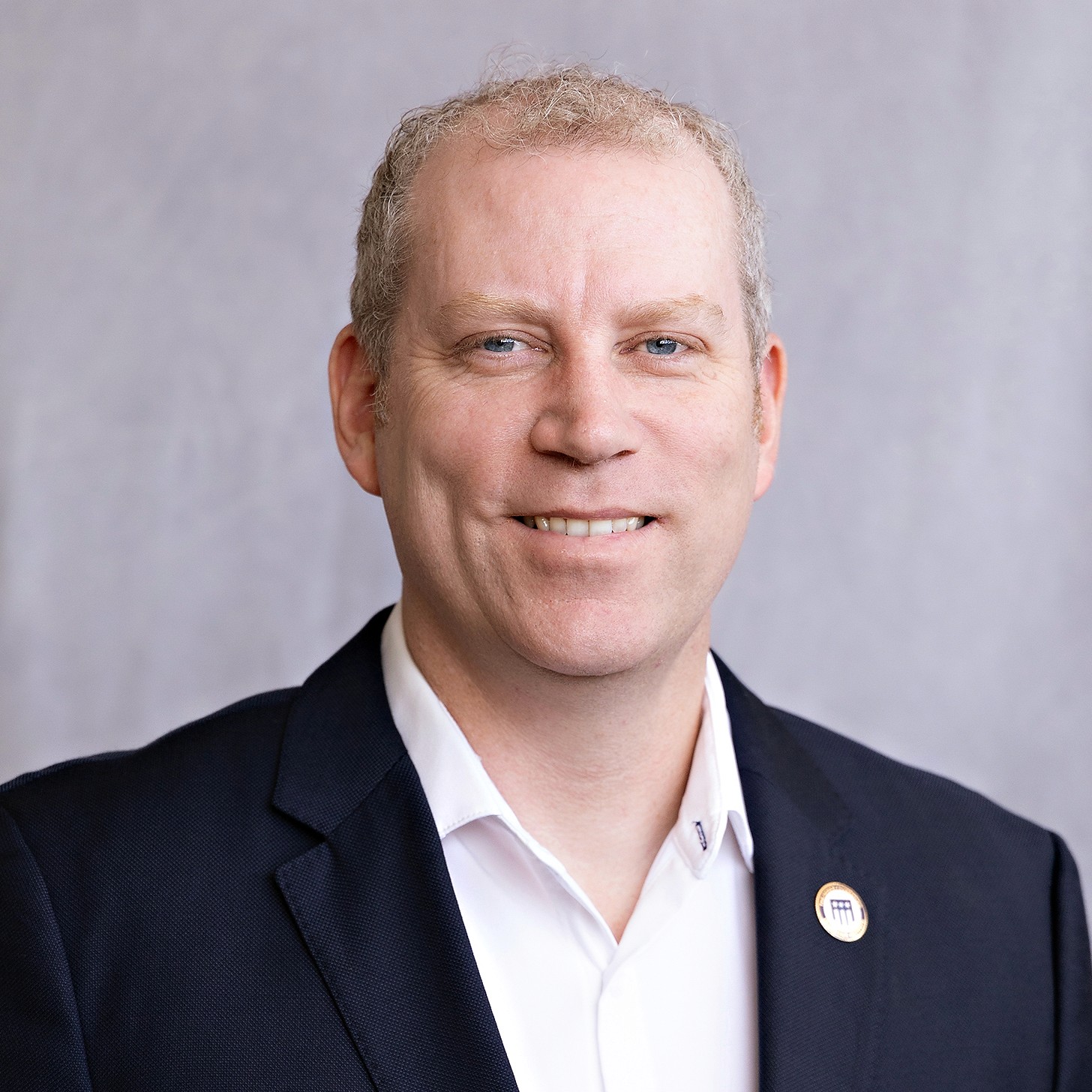
Daniel Dopler

The $15 Million Question: Consolidating Training Without Sacrificing Quality
Executive Summary
Three geographically dispersed training programs were each excellent in isolation and collectively inefficient at scale. By consolidating them into a single hub-and-spoke model, we delivered an estimated $15 million in savings over five years — without compromising training quality for the specialized EOD teams that depended on it. The project required building a business case, navigating institutional resistance, and coordinating across stakeholders who had competing interests in the status quo.
Multiple times per year, I watched elite EOD teams travel from San Diego to Idaho Falls for a week of nuclear fuel cycle training, then fly to Los Alamos, New Mexico for nuclear weapon design courses, then drive three hours south to Sandia National Laboratories for practical applications. The training at each location was excellent. The logistics were expensive, time-consuming, and inefficient.
I started asking a simple question: What if we brought the instructors to one location instead of sending teams to three?
The answer turned out to be $15 million in savings over five years. But getting there required challenging institutional inertia, navigating competing interests, and building a business case strong enough to overcome both personal preferences and bureaucratic resistance.
The Training Pipeline: Effective but Expensive
From December 2013 to December 2016, I served as an instructor at EOD Training and Evaluation Unit One in San Diego, specializing in nuclear and radiological response training for Crisis Response Force teams. These weren't standard EOD units. CRF teams were specially selected to be regional commanders' first responders for potential weapons of mass destruction, determining whether Tier 1 assets needed to be deployed.
The training pipeline reflected the high stakes. CRF teams spent eight weeks rotating through premier facilities:
Three weeks at an Advanced Electronics course learning IED circuitry and manual entry techniques
Two weeks at Dugway Proving Ground for advanced chemical and biological training plus homemade explosives courses
One week at Idaho National Laboratory for nuclear fuel cycle training and advanced radiographical techniques
Time at Los Alamos National Laboratory for in-depth nuclear physics and weapon design
Final training at Sandia National Laboratories for practical applications integrating everything learned
My role as the Nuclear and Radiological Response Division instructor was to attend Idaho National Laboratory, Los Alamos, and Sandia with each team multiple times per year. This gave me a front-row seat to the entire logistical operation: commercial flights, rental vehicles, hotel accommodations, per diem expenses, and coordination headaches across multiple government facilities.
The training content at each lab was world-class. Idaho National Laboratory had unparalleled expertise in nuclear fuel cycles and radiological imaging. Los Alamos offered access to scientists who had designed nuclear weapons and understood their physics at the deepest levels. Sandia provided the facilities and scenarios to apply everything in realistic settings.
But as I made the same trips repeatedly, watching teams navigate the same logistical challenges, I started seeing inefficiencies that had nothing to do with educational quality.
The Insight: Geography Isn't Pedagogy
The key insight was simple: Los Alamos and Sandia are both in New Mexico, separated by about an hour's drive. Idaho National Laboratory is in Idaho Falls, requiring commercial flights and significant travel time.
The training content from Idaho and Los Alamos was essential. But did it have to be delivered at those specific locations? Or could we bring the instructors to Sandia and deliver the same curriculum in one consolidated location?
I started working with stakeholders across the training enterprise to explore this possibility. The potential benefits were clear:
Time savings: Eliminating travel between Idaho and New Mexico would cut approximately two weeks from the eight-week pipeline.
Cost reduction: Fewer flights, fewer hotel nights, less per diem, reduced vehicle rentals and fuel costs.
Simplified logistics: Coordinating with one facility instead of three, reducing administrative overhead and scheduling complexity.
Maintained quality: The same instructors teaching the same content, just in a different location.
I built a financial model projecting the savings. Consolidating the nuclear and radiological training at Sandia would save approximately $15 million over five years of CRF team training at the existing operational tempo.
The Resistance: When Savings Aren't Enough
The business case was compelling. The resistance was personal and institutional.
Personal preferences: Some team members genuinely valued the trips to Los Alamos and Idaho for reasons beyond the training. Los Alamos has deep historical significance in nuclear weapons development. The town itself is interesting, and people enjoyed the experience of being there. Idaho Falls offered outdoor recreation opportunities. For operators who spent much of their careers in austere deployment environments, these trips were highlights.
Telling people "we're cutting the Los Alamos trip to save money" felt like taking something away, even if the training content would be preserved.
Institutional concerns: The labs themselves had legitimate worries. Sending instructors to Sandia instead of hosting teams at their own facilities meant new travel and logistical costs for them. They were being asked to absorb expenses and administrative burdens they hadn't budgeted for.
More fundamentally, there was concern about whether they would raise prices to account for these new costs, potentially eliminating the savings we projected. If Idaho National Laboratory and Los Alamos increased their fees to cover instructor travel, the financial case would collapse.
Bureaucratic inertia: The existing pipeline had been in place for years. It worked. Changing it required coordination across multiple government agencies, approval from several layers of leadership, and willingness to disrupt established relationships and processes.
In large organizations, "it works" is often a stronger argument than "it could work better."
Building Consensus Through Influence
My rank and position gave me no formal authority over the national laboratories or the CRF training program writ large. I couldn't order anyone to change anything. I had to build the case and work through influence.
I started by documenting everything: current costs per team, travel time lost, administrative burden, and projected savings under different scenarios. I created sensitivity analyses showing the break-even points if lab costs increased by varying amounts.
We had working groups with stakeholders from all three labs, the training units on both coasts (East and West Coast EOD Training and Evaluation Units maintained parallel structures), and the operational commands that depended on CRF capabilities. I listened to concerns and tried to address them in the proposal.
For the labs, I emphasized that we wanted to maintain the same instructor quality and course content. This wasn't about cutting corners. It was about delivering the same training more efficiently.
For operators who valued the travel experience, I acknowledged that Los Alamos and Idaho were special places, but emphasized that the mission was about building the most capable response force possible, not tourism.
For leadership, I presented the financial case and the operational benefits: teams would spend less time traveling and more time training, returning to their units faster and better prepared.
The proposal gained traction. But ultimately, it required senior leadership with sufficient authority to push the change through. My role was to build the analytical foundation and create enough support that when authority was applied, it felt justified rather than arbitrary.
The Implementation and Impact
The consolidation was approved and implemented. CRF teams began receiving their Idaho National Laboratory and Los Alamos training content at Sandia National Laboratories, delivered by the same expert instructors.
The projected savings materialized. Over five years, the consolidated training model saved approximately $15 million while maintaining the same educational quality. Teams completed the pipeline two weeks faster, returning to their units with more time to integrate training before deployment.
More importantly, the change demonstrated something valuable about organizational efficiency: sometimes the biggest savings come not from cutting capabilities, but from rethinking how you deliver them.
The training content didn't change. The instructor quality didn't decrease. We simply eliminated unnecessary complexity and geographic dispersion that added cost without adding value.
The Broader Lesson: Question Everything, Especially What Works
The hardest organizational inefficiencies to eliminate are the ones embedded in systems that work. When something functions adequately, there's little appetite for change. The risk of disruption feels larger than the potential for improvement.
But "it works" and "it works well" are different standards. The CRF training pipeline worked. Teams were getting trained. Capabilities were being developed. But it wasn't working as efficiently as it could.
The key to driving change in working systems is building an airtight case:
Quantify the opportunity: Vague assertions about potential savings don't move bureaucracies. Specific dollar figures and timeline improvements do.
Preserve what matters: Make it clear you're not attacking the mission or the people. You're improving the delivery mechanism.
Address concerns proactively: Don't dismiss objections as resistance to change. Engage with them seriously and incorporate valid concerns into the proposal.
Work through influence before authority: Build enough consensus that when leadership has to make a decision, the path forward is clear.
Accept that you won't get credit: I proposed the consolidation, built the business case, and worked with stakeholders to refine it. But I moved on to other duties before implementation. Senior leaders made it happen. The institution got the credit. That's fine. The goal was improvement, not recognition.
The Takeaway: Efficiency Is a Form of Leadership
Leadership isn't just about inspiring people or making tough calls in crises. Sometimes it's about looking at a process everyone accepts and asking: "Is there a better way?"
The $15 million in savings didn't come from a dramatic intervention or bold vision. It came from traveling the same route repeatedly, paying attention to inefficiency, building a case for change, and doing the unglamorous work of coordinating across bureaucracies.
That's the kind of leadership that doesn't make headlines but makes organizations more effective: seeing waste that others overlook, quantifying it, and building the coalition needed to eliminate it.
In my next role, I'm looking for organizations where this kind of systems thinking can drive impact: identifying inefficiencies in working processes, building the business case for improvement, and implementing changes that deliver measurable value without sacrificing quality.