
Leadership & Strategy
Navy EOD operators make life-or-death decisions with incomplete information under time pressure every day. Here's the field-tested framework that translates directly to high-stakes business decisions.
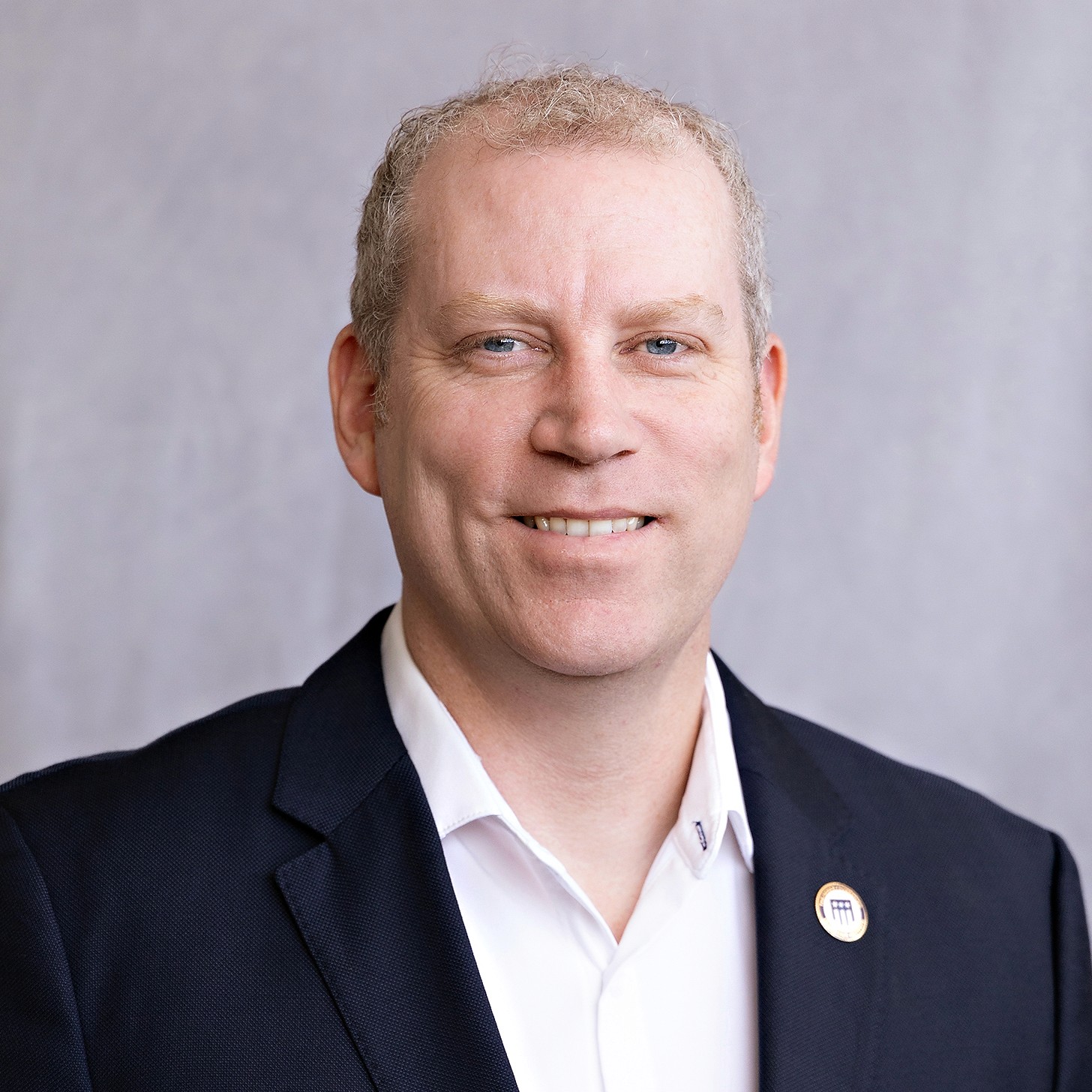
Daniel Dopler
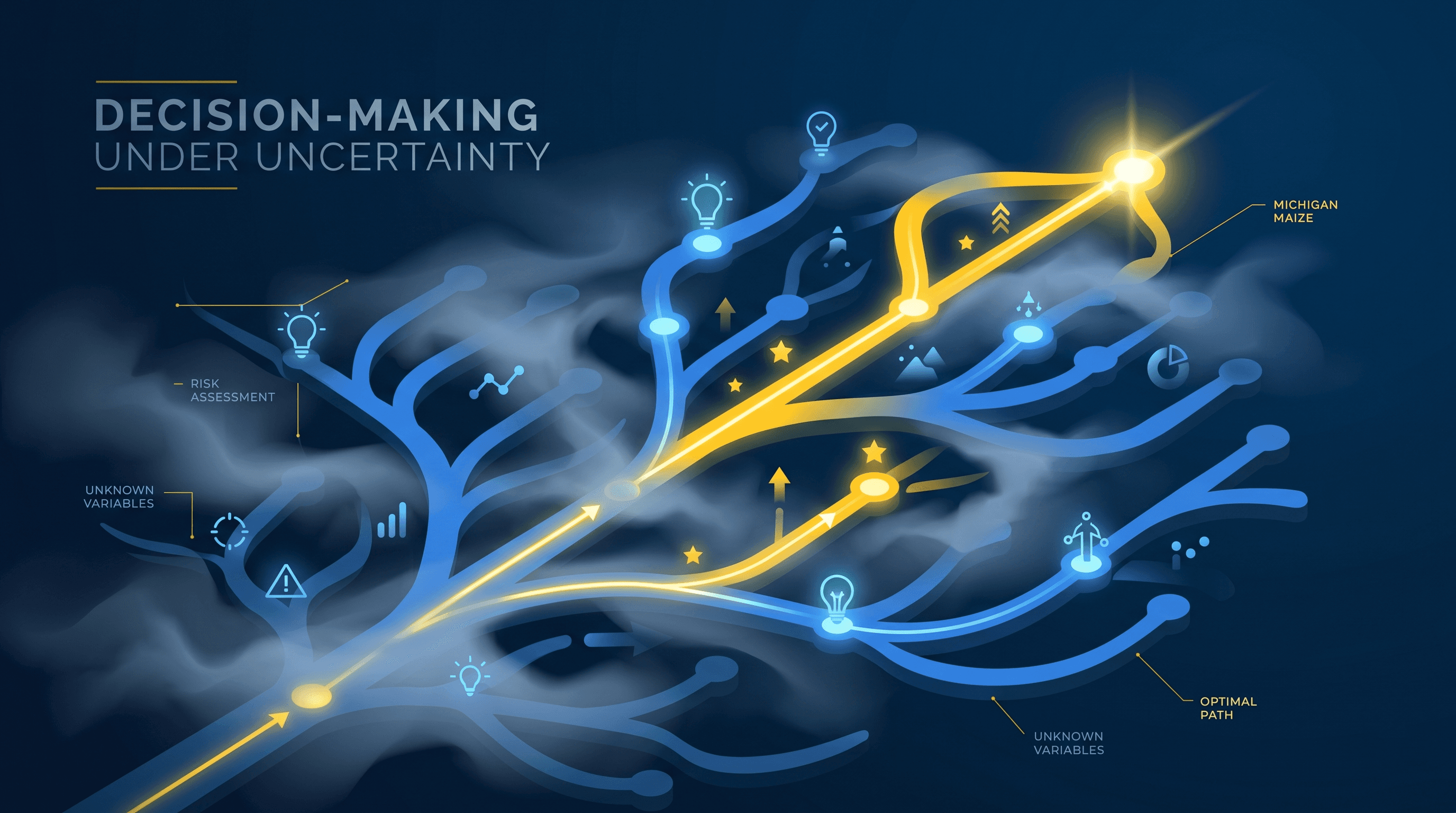
Decision-Making Under Uncertainty: A Field-Tested Framework
In EOD, you never have complete information. You never have unlimited time. And you never get to wait until you're certain before you act.
You have a device in front of you. You have the information you can gather from a distance. You have your training and your experience. And you have a decision to make.
That is the decision environment. It is not unique to combat. It is the decision environment of every meaningful choice, in business, in leadership, in life.
The Three Decision Traps
Before the framework, name the traps. Most poor decisions under uncertainty fall into one of three patterns.
Trap 1: Analysis Paralysis. Waiting for more information before deciding, even when more information isn't coming and the cost of delay is real. This feels like prudence. It is often cowardice.
Trap 2: False Certainty. Committing to a course of action with more confidence than the evidence supports. This feels like decisiveness. It is often arrogance.
Trap 3: Decision Avoidance. Framing the situation as "not yet a decision" when it actually is one. Choosing not to decide is a decision. It just outsources the outcome to chance or circumstance.
The Framework: Four Questions in Sequence
What do I actually know?
Not what I think is probably true. Not what makes a clean story. What is confirmed by direct observation or reliable data?
In EOD: the device is 40 meters from the road, partially obscured, with wires running toward a known triggering position. That's confirmed. Everything else is inference.
In business: revenue is down 14% this quarter. Customer acquisition cost is up. One major account went to a competitor. Those are facts. Everything else is story.
Separate facts from inferences before you analyze anything.
What are the plausible scenarios?
Given what you know, what are the two or three most likely explanations? Don't build a single narrative and commit to it. Build multiple hypotheses and hold them simultaneously.
This is cognitively uncomfortable. The brain wants one answer. Force two or three.
In EOD: this could be a pressure-plate device set for vehicle traffic; it could be a command wire device waiting for a target; it could be a decoy designed to fix our position while the real threat is elsewhere. Each scenario changes the right response.
In business: the revenue drop could be market-wide (check competitor performance), account-specific (check customer health scores), or product-specific (check usage data by feature). Each scenario points to a different fix.
What is the cost of being wrong in each direction?
This is where most decision frameworks stop too early. Identifying plausible scenarios isn't enough. You need to weigh them by the cost of the error, not just the probability.
A 20% chance of a catastrophic outcome often demands more weight than an 80% chance of a manageable one.
In EOD: the cost of treating a live device as a decoy is fatal. The cost of treating a decoy as a live device is time and resources. That asymmetry determines the response even before you've established the probability.
In business: the cost of over-investing in the wrong explanation is wasted resources. The cost of under-investing in the right explanation is lost competitive ground. Know which error you're more afraid of, and make that explicit.
What action gives me the most optionality?
When you're uncertain, favor actions that keep options open over actions that close them. Move toward a position that lets you gather more information, recalibrate, and adjust.
In EOD: don't commit all your assets to a single approach if you can stage them. Keep a reserve. Move to the position that gives you the most information while minimizing exposure.
In business: pilot before scaling. Decide before signing the 5-year contract. Build the toggle before you burn the bridge.
The Insight
The goal of decision-making under uncertainty is not to eliminate uncertainty. It is to make decisions that are defensible, reversible where possible, and sized appropriately to the confidence you actually have.
Confident leaders make decisions. Wise leaders make decisions sized to the quality of the information they have, and build in checkpoints to course-correct when they're wrong.
The Takeaway
The next significant decision in front of you, run the four questions.
What do you actually know? What are the plausible scenarios? What's the cost of being wrong in each direction? What action preserves the most optionality?
You won't eliminate uncertainty. But you'll make a decision that can survive being wrong, and that's the standard that matters.