
Leadership & Strategy
Leading Eight Departments I'd Never Done: The Sunset Tour That Wasn't I returned to the EOD Training and Evaluation Unit in June 2023 expecting to...

Daniel Dopler
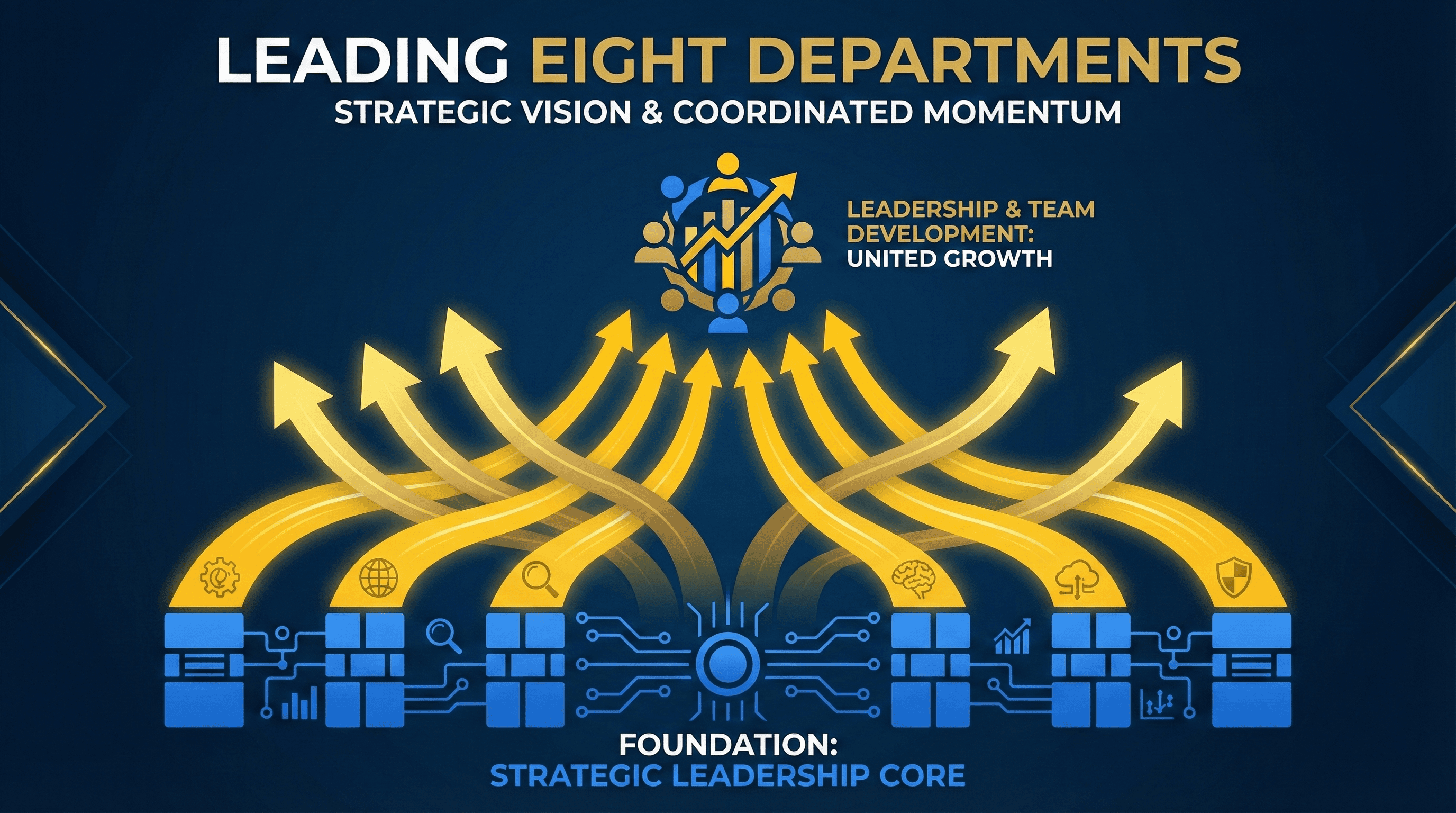
Leading Eight Departments I'd Never Done: The Sunset Tour That Wasn't
I returned to the EOD Training and Evaluation Unit in June 2023 expecting to teach, maybe mentor younger instructors, and coast toward retirement with some dignity. It was supposed to be a "sunset tour," the final assignment before hanging up the uniform in June 2025.
Instead, I walked into organizational chaos and inherited eight departments I had never managed, ranging from Arms and Ammunition accountability to boat operations to contract management. At my peak, I led 53 people, 26 sailors, 6 government civilians, and 21 contractors, across functions I knew almost nothing about.
Supply was the hardest. The different "pots" of money, the contract thresholds, the vendor coordination, the monthly reporting requirements, it was a labyrinth I navigated with ChatGPT and borrowed expertise from other Supply Officers who took pity on my confusion.
By the time I retired two years later, I had built three of the Commanding Officer's five dashboard pillars, scaled explosives allocation by 600%, created real-time tracking systems for vehicles and boats, and helped navigate an organizational transformation that was literally rebuilding the airplane in flight.
This is the story of leading through uncertainty, learning on the fly, and building systems in domains where you're not the expert.
The Arrival: No Plan, Maximum Chaos
When I returned to the training unit in June 2023, the command was in the middle of a fundamental restructuring. For years, the unit had operated using a division-based model. Incoming EOD platoons would rotate through six specialized divisions:
IEDs and Surface operations
Underwater operations
Chemical, Biological, and Homemade Explosives
Nuclear and Radiological hazards
Combat skills
Final Training Exercise (only 4 people, but supplemented by all divisions during events)
Each division had dedicated instructors who focused exclusively on their subject matter. Teams would move from division to division, getting new instructors for each phase of training. At the end, they'd complete a Final Training Exercise that integrated everything they'd learned.
The command was transitioning to a team-based model. Instead of divisions, there would be three training teams. When an EOD platoon arrived, they'd work with one training team for their entire time at the unit. No more rotating between divisions and learning from specialists. Each training team would need to be capable of teaching the full curriculum.
There are pros and cons to each model, but the transition between the two was six to twelve months of building the airplane in the air. Every instructor had to expand their expertise beyond their specialty. Curriculum had to be reorganized. Scheduling had to be completely redesigned.
All leadership attention was consumed by this organizational transformation. So when I arrived, an experienced senior leader in his final tour, there wasn't much thought given to where I should be placed or how I should be used.
I wasn't assigned to lead one of the new training teams. I wasn't given a defined role in the transition. I was simply told: "We have an Arms, Ammunition, and Explosives inspection in two weeks. Take over for the manager who's leaving."
That was the beginning.
The Expansion: When One Department Becomes Eight
The initial assignment was managing the armory and AA&E accountability. That alone was challenging, I had been a user of explosives for 20 years but had never seen the administrative machinery behind the scenes.
After the first month, the Department Head I worked for transferred. Someone senior to me took the role in title, but he essentially turned the job over to me since I was a previous Department Head at another command (I had been Director of Training at EOD Mobile Unit Eleven).
Suddenly, I wasn't just responsible for the armory. I was responsible for:
Arms, Ammunition, and Explosives (AA&E): Accountability, allocation, forecasting, and compliance
Supply: Procurement, inventory management, vendor coordination, and funding across multiple budget categories
Contracts: Managing service contracts, renewals, performance evaluation, and vendor relationships
Facilities: Maintenance, repairs, space allocation, and infrastructure projects
Boats: Four operational boats, two jet skis, maintenance, crew qualifications, and scheduling
Vehicles: 50+ vehicles of three different types (rentals, Navy dispatch, GSA leases), maintenance, and allocation
Training Aid Fabrication: Building custom equipment and props for training scenarios
Tactical Training Course: Administrative, logistical, and planning support for EOD student finishing school, tactical communications course, combat shooting course, and tactical air operations course
The command had between 130-145 people total. At my peak, I had 26 sailors, 6 government service employees, and 21 contractors working under me, 53 people across eight distinct functional areas.
I knew nothing about how most of these departments functioned or should work.
The Learning Curve: Supply as the Final Boss
Of all eight departments, supply was the hardest to grasp.
There are multiple "pots" of money for different types of purchases. There are different approval thresholds depending on whether you're buying goods or services. There are core vendors, annual fund recoupments, monthly reporting requirements, and arcane rules about what can be purchased with which funding source.
I would read the regulations and still not understand what I was allowed to do. I would review purchase requests and have no context for whether the price was reasonable or the approval pathway was correct.
ChatGPT became one of my most valuable resources. I would feed it scenarios and ask for clarification on procurement rules. I would reach out to other Supply Officers and ask for their patience as I learned the basics.
It was humbling. I had been in the Navy for over 20 years, held multiple leadership positions, and managed complex operations. But supply chain management and government procurement felt like a foreign language I was learning in real time while making consequential decisions.
The saving grace was that I had strong people under me who understood the technical requirements. My job wasn't to be the expert. It was to remove obstacles, provide strategic direction, and hold them accountable to standards they helped define.
The Systems Solution: Building Visibility Across Chaos
I quickly realized that leadership across eight unfamiliar departments required a different approach than traditional subject matter expertise.
I couldn't be the expert in AA&E accounting systems, boat maintenance schedules, contract renewal cycles, facilities repair prioritization, and supply procurement rules simultaneously. But I could build systems that provided visibility, enabled accountability, and automated administrative follow-up.
I had never built anything in SharePoint before June 2023. My only exposure was seeing it used years earlier for Crisis Response Force reporting. I learned through YouTube videos, trial and error, and immediate operational need.
Over the next two years, I built three major systems:
The AA&E Tracker: Real-time inventory visibility, standardized consumption forecasting, and automated reporting that enabled a 600% increase in explosives allocation and 98% utilization (up from 60%).
The Vehicle and Boat Tracker: Real-time fleet status, automated maintenance notifications, and predictive planning that transformed weekly "I don't know" responses into year-ahead forecasting.
The Contract Cycle Tracker: Automated email reminders for contract renewals, performance reviews, and funding deadlines, integrated into the finance and supply dashboard.
When a new Commanding Officer arrived and wanted dashboard visibility into command operations, my SharePoint systems provided three of his five priority pillars immediately.
The Organizational Context: Transformation Under Pressure
While I was building these systems and learning to manage eight departments, the entire command was navigating the division-to-team transition.
This wasn't a carefully planned transformation with months of preparation. It was an organizational directive that required immediate implementation while maintaining continuous training operations.
Instructors who had spent years as specialists in underwater operations or nuclear response had to become generalists capable of teaching the full curriculum. Schedules that had been built around sequential division rotations had to be redesigned around continuous team-based training. Equipment and resources that had been organized by division had to be reallocated to teams.
My role in this transformation was primarily enabling rather than directing. The training teams needed vehicles, boats, explosives, and supplies to be available when required. My job was ensuring the logistics infrastructure supported the new model without becoming a constraint.
The systems I built provided the visibility and predictability that allowed training teams to plan confidently. They didn't need to worry about whether vehicles would be available or explosives would run out. The dashboards showed them the truth in real time.
The Human Element: Leading Without Being the Expert
The most important lesson from managing eight departments I'd never done was this: you don't need to be the subject matter expert to lead effectively.
What you need is:
Clarity on requirements: Understand what success looks like, what compliance requires, and what the mission demands.
Trust in your people: Identify who actually understands the technical details and empower them to make decisions.
Systems for visibility: Build mechanisms that show you the truth about status, performance, and emerging problems before they become crises.
Accountability frameworks: Create clear standards and consequences that people help design so they own the outcomes.
Willingness to learn: Be humble enough to ask questions, use whatever resources are available (including AI tools), and admit when you don't know something.
The sailors, government civilians, and contractors who worked for me were the experts. My job was creating the conditions for them to succeed: removing bureaucratic obstacles, providing strategic direction, building tools that made their work easier, and holding them accountable to standards they believed in.
The Legacy: Systems That Outlast Tenure
When I retired in June 2025, the systems I built continued operating. I hope they've been improved and expanded by the people who came after me, but the foundation remains.
The AA&E forecasting and real-time inventory tracking. The vehicle and boat allocation dashboard. The contract renewal automation. These weren't personal achievements. They were institutional capabilities that solved persistent problems.
That's the measure of effective leadership in domains where you're not the expert: did you build something that works without you? Did you create systems that people will continue using because they make sense, not because you're there to enforce them?
The organizational transformation from divisions to training teams succeeded. Not because I directed it, I didn't, but because the logistics infrastructure adapted to support it. Teams could plan confidently because they had visibility and predictability in the systems that supported their mission.
The Insight
Competence in your domain is table stakes. Competence in the conditions for others to apply their domain expertise, that's what senior leadership actually requires.
Civilian Translation
Every executive who gets promoted into a broader role faces this: you now own functions where you aren't the expert. The instinct is to either micromanage (unsafe, you'll make bad calls) or delegate and disappear (unsafe, you'll lose accountability). Neither works.
The third path is what worked in eight departments I knew nothing about: get visible quickly, ask questions that demonstrate you understand the mission even if not the mechanics, build systems that give you honest data, and protect your technical specialists from the organizational noise that would otherwise block their work.
A VP of Operations managing marketing, finance, and engineering for the first time faces the exact same challenge as inheriting Arms and Ammunition, boat operations, and contract management simultaneously. The domain changes. The leadership playbook doesn't.
The Takeaway: Uncertainty Is the Job
I expected a quiet sunset tour. I got organizational chaos, eight departments I'd never managed, and two years of building systems while learning on the fly.
It was exactly what I needed.
Leadership at senior levels is almost always about operating in domains where you're not the expert. The technical specialists report to you, but you can't match their depth in every area. Your job is creating the conditions for experts to succeed: clarity, tools, accountability, and trust.
In my next role, I'm looking for similar challenges: complex organizations, multiple functions, the need to build visibility and predictability across unfamiliar domains. The skills that allowed me to lead eight departments I'd never done—systems thinking, rapid learning, trust in technical experts, and building tools that outlast tenure—translate directly to business environments facing complexity and change.
The question isn't whether you know everything. The question is whether you can create the conditions for people who do know to execute effectively.