
Career & Transformation
From the Pitch to the Perimeter: Building Teams That Flow Long before I was navigating blast radius calculations and boardroom negotiations, I was...

Daniel Dopler
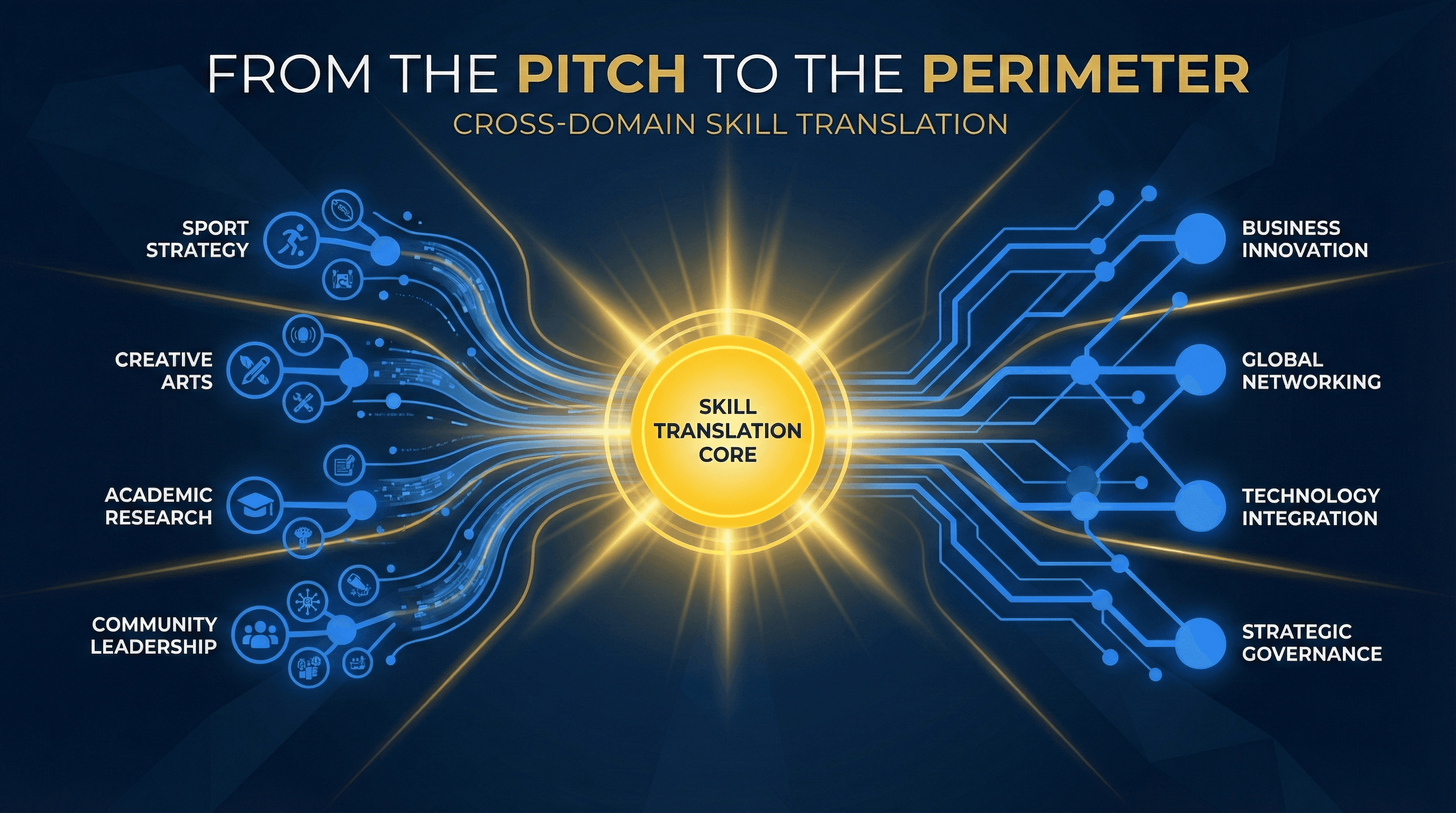
From the Pitch to the Perimeter: Building Teams That Flow
Long before I was navigating blast radius calculations and boardroom negotiations, I was learning decentralized command on the soccer pitch. Soccer is a game of continuous flow, unlike sports with set plays and frequent huddles, it requires every player to be a situational leader, reading and responding in real time.
Leading EOD teams in the Navy and now studying organizational design at Michigan Ross, I've seen how these principles of fluid, decentralized leadership translate directly to high-stakes operations. The most elite teams I've led, and the highest-performing organizations I study, all operate on these same core principles of flow.
Positionless Proficiency
In soccer, when a defender pushes forward into the attack, a midfielder must instinctively drop back to cover. There's no time to ask permission; the game demands fluid role-switching based on what the moment requires.
In leadership: Cross-functional teams are only as strong as their coverage. I build teams where everyone understands the commander's intent so deeply that they can swap roles mid-mission without a drop in performance. When one of my EOD technicians went down during a mission, another team member seamlessly stepped into the lead role because we had trained for positionless proficiency, not rigid hierarchies.
The "First Touch" Principle
In soccer, your first touch determines how much time you have for your next decision. A poor touch invites defensive pressure and shrinks your options. A clean touch creates space and opens up the field.
In leadership: How you react to the first sign of a crisis dictates your team's momentum. I train leaders to maintain a composed first touch when high-stakes problems arrive, buying time for better decisions rather than reactive scrambling. That initial composure cascades through the entire organization.
Playing into Space
The best players don't pass to where a teammate is; they pass to where the teammate is going to be. This requires reading the game three moves ahead.
In leadership: Strategic leadership is about anticipatory resource allocation, recognizing where the market or mission is moving and positioning your team in that space before the competition arrives. It's the difference between responding to change and shaping it.
The Moment of Transfer
The connection became undeniable during a clearance operation in Helmand Province in 2011. My team lead went down with heat exhaustion mid-operation. No time for a formal handoff, no checklist, no permission granted. The team kept moving.
Later, I tried to explain why it worked so smoothly. The answer was the same every time: "We knew the objective." Not just our role in achieving it, the actual outcome we were all working toward. That kind of shared understanding is exactly what a goalkeeper trains into a back four over an entire season: not a playbook, but a mental model.
I had been playing positionless for fifteen years before I knew that's what it was called.
Building the Fluid Organization
By embedding this flow-based approach in my Navy EOD units, my teams operated with genuine autonomy, executing complex missions without micromanagement because they understood both the objective and their teammates' capabilities. We achieved what our command called exceptional operational independence, with teams consistently making sound tactical decisions in high-pressure environments.
In the executive world, this is the difference between organizations that scale and those that bottleneck at the leader's desk. The future belongs to leaders who can build teams that flow.
Synthesis
The underlying principle across both domains is the same: high-performing teams don't execute playbooks. They execute shared mental models. The playbook handles the expected. The mental model handles everything else.
Soccer, EOD, and high-performing organizations all demand the same thing: every member understanding the objective deeply enough to improvise correctly when the plan breaks, and the plan always breaks.
Implications
Look at the teams you've been part of that felt effortless. The ones where decisions happened faster than the org chart suggested they should, where people covered each other without being asked. Those teams weren't lucky. They had invested in building shared mental models, not just shared procedures.
The question for your own team: if your team lead went down mid-operation today, would the team keep moving in the right direction? If the answer is no, you don't have a talent problem. You have a mental model problem.