
Leadership & Strategy
Doing the Dirty Work: Lessons from Tony Bruce On day three of tryouts at Sonoma State University, I was cut from the soccer team. It was the first...
Daniel Dopler
Doing the Dirty Work: Lessons from Tony Bruce
On day three of tryouts at Sonoma State University, I was cut from the soccer team. It was the first time in my life I had been cut from anything. Seventy-five players had shown up for tryouts. I didn't make the initial cut to thirty.
I was in shock. That afternoon, still processing what had happened, I went to the Gap Outlet in Petaluma and applied for a job. I got it. Within hours of being cut, I had already started building the next chapter, even though I had no idea what it would look like.
What I didn't know then was that a short, happy Scottish electrician named Tony Bruce was about to change the trajectory of my life, not for the first time and not for the last.
The First Time I Saw Tony Bruce
I grew up playing soccer competitively starting at age 10. Tony was always around, coaching teams in the area. I would see him at tournaments and sometimes train with age groups above mine when he needed extra players. Even as a kid, I understood Tony was different.
By day, he was an electrician. By night and on weekends, he coached youth soccer, dedicating himself to helping kids get into college to play. He had played in the USSL, the league before MLS existed, and had contacts all over the world. If he didn't know you personally, you knew of Tony. That's just how it was.
In high school, my core of friends were a dedicated group of soccer players. There were five of us, plus the older brother of one of the guys. Kyle was out of school and working, but he was still part of our circle. He and his younger brother had a rough childhood. They lived with their mother, who was an alcoholic. Kyle would get kicked out of the house for disagreeing with her.
When that happened, Tony would let Kyle stay at his place. No drama, no conditions. Just a couch and a safe place to sleep. Tony was solely dedicated to helping as many kids as he could, even as he struggled with his own boys.
I played on teams Tony coached from time to time, but I was never a permanent player on any of his teams. If the opportunity arose, I would play for him and learn when I did. He had a way of seeing things in players that others missed.
Years later, Tony told me something I've never forgotten: "You're the player in the background doing the dirty work so that others can have the glory."
He meant it as a compliment. And he was right.
The Year After the Cut
After being cut from the Sonoma State team, I made a New Year's resolution: I would make the team the following year. I had no guarantee it would work, but I had a plan.
I took a heavy course load, seventeen units, which would become my average for the rest of college. I worked forty hours a week on the night shift at the Gap. And in every margin of time I had left, I trained.
A typical day looked like this: wake up at 8 AM, class from 9 AM to 1 PM, homework from 2 to 3 PM, train from 3 to 5 PM, shower and eat, read and prep for work, then work from 7 PM to 3 AM. Get home and asleep by 4 AM. Wake up at 8 and do it again.
In the spring, the team started practices at 6 AM. The coaches welcomed me to attend, but I needed sleep more than I needed to be at those sessions. So I asked if I could get a copy of the workouts and do them in the afternoons instead. They agreed.
I made sure I trained on the practice field where the coaches and players could see me. Every day. I wasn't trying to show off. I just wanted them to know I was serious. That I hadn't given up. That I was still working.
What I was learning, without knowing it, was the value of visible commitment.
The Summer That Changed Everything
The summer before my second tryout, Sonoma State hosted the US Soccer National "B" License coaching certification. It was a coincidence that the camp was held there, but it turned out to be one of the most important coincidences of my life.
Tony knew I was training at Sonoma State. He knew I had been cut the year before and was working to make the team. He showed up at the camp and asked if I would be one of the "players" the coaching candidates would use for their training sessions.
I didn't think much of it at the time. I just knew Tony was asking, and when Tony asked, you said yes. So I played in the sessions, worked hard, and did my job.
What I didn't know was that Tony was watching how I played. And more importantly, he was talking to Marcus Ziemer, the head coach at Sonoma State.
Tony had watched me grow up playing soccer. He knew I wasn't the boldest player on the field. I wasn't the guy who scored highlight-reel goals or dominated games with individual brilliance. But I was reliable. I did the defensive work. I covered for teammates. I made the players around me better by doing the things that don't show up on stat sheets.
Tony saw that. And he made sure Coach Ziemer saw it too.
Making the Team
When I went back for tryouts my second year, something had shifted. The coaches had seen me training all year. They knew I was dedicated. And Tony had vouched for me in ways I wouldn't fully understand until much later.
I made the team. Not as a midfielder, which was the position I had played my whole life, but as a defender. It was a different role, but it fit. Doing the dirty work. Covering for others. Making the team function.
In 2002, we won the NCAA Division II National Championship against Southern New Hampshire State University. I was a support player who came off the bench to give starters a break before halftime and toward the end of games.
My impact that year wasn't in minutes played or goals scored. It was in team chemistry. I was a friend to everyone. I learned how to address conflicts directly and individually, keeping internal cliques from fracturing the team. The grey man in the background doing the dirty work so others could have the glory.
It was exactly what Tony had taught me, even if I hadn't fully understood the lesson yet.
The Moment I Found Out
That Christmas, I was home and ran into Tony. I asked him directly: "How much did you talk me up to Coach Ziemer?"
He smiled that coy Scottish smile and said he did nothing of the sort.
But I knew different. Tony had advocated for me when it mattered most. He had used his credibility and his relationships to give me a chance I wouldn't have gotten on my own.
Tony Shows Up Again
Years later, in 2006, I was in San Diego recovering from nerve damage that had ended my attempt at Navy SEAL training. My right arm was paralyzed, and the doctors said it would take five to six months to regain function.
I was stuck. Physically limited. Uncertain about what came next.
And then Tony showed up. He was coaching for a San Diego based youth club. While I was recovering, I spent my afternoons and evenings helping him coach and talking to him about life decisions.
He had the damnest way of popping up when he was needed.
For five months, I was back in Tony's orbit, learning from him again. Not just about soccer, but about resilience, about finding your path, about doing the work even when the outcome is uncertain.
Tony has since passed. But his influence on my life didn't end when he died. It's woven into how I lead, how I mentor, and how I think about advocacy and relationships.
The Full Circle
A decade after I graduated from Sonoma State, I was at a San Diego recruiting tournament and ran into Marcus Ziemer, the head coach who had given me a second chance.
I asked him the question I had always wondered about: "How much did Tony influence your decision to take a chance on me?"
Marcus thought for a moment. "Tony put me over the edge," he said. "But it was your ability to prioritize work over soccer while still asking for the workouts and doing them daily that started the process. I saw your commitment and dedication to improving and learning."
It might have been the polite way of saying it was Tony. But Marcus also remembered that I was training every day, so maybe it was a bit of both.
The truth is, it was both. Tony's advocacy opened the door. My visible commitment kept it open. And the combination of relationships and effort created an opportunity I wouldn't have had otherwise.
The Lessons Tony Taught Me
Tony never sat me down and delivered formal lessons. He taught by example and by showing up when it mattered.
Lesson 1: Do the dirty work.
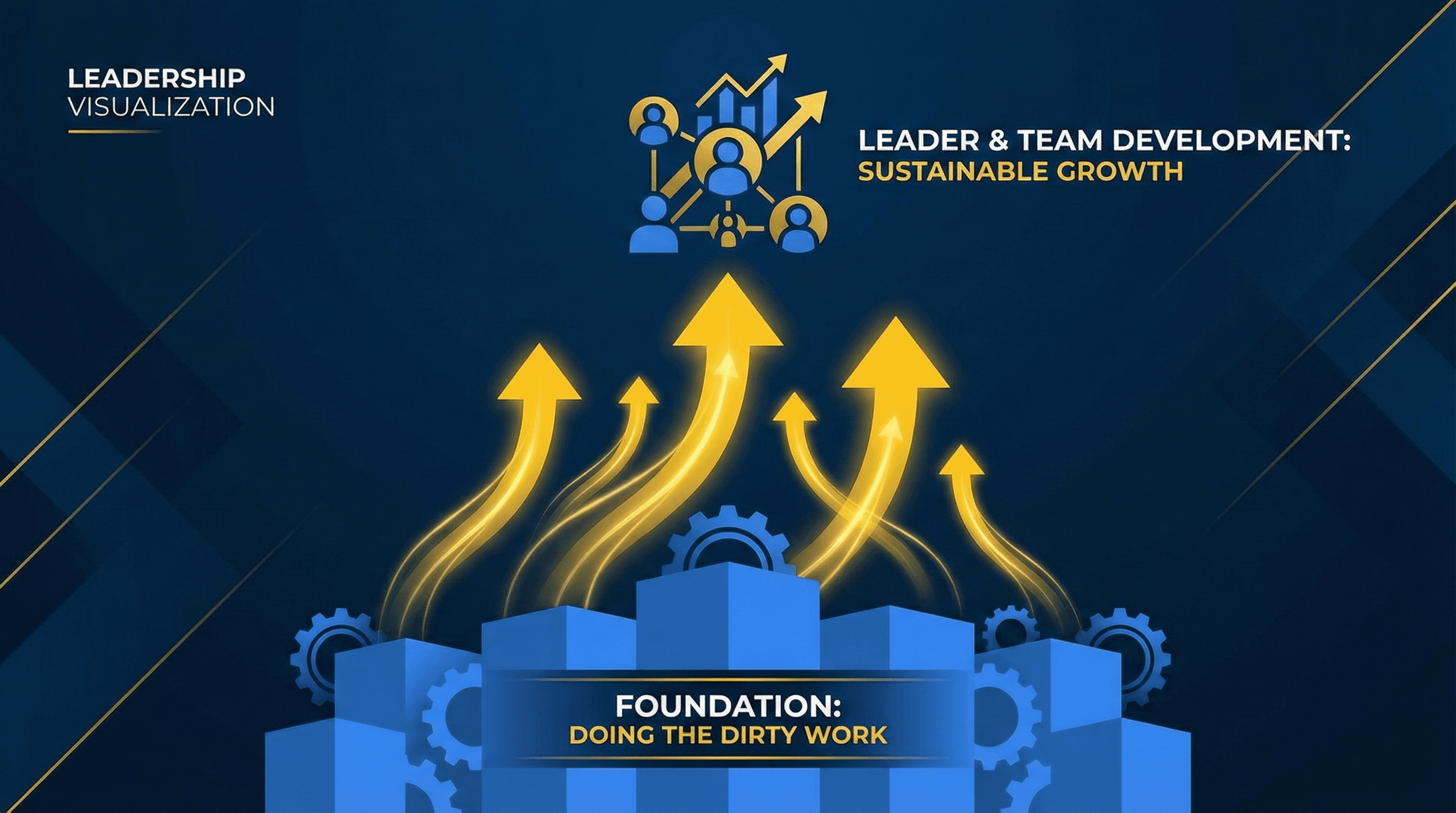
Not everyone gets to be the star. Most people don't. But teams need players who will do the unglamorous work that makes everyone else successful. Covering defensively. Resolving conflicts. Maintaining chemistry. These aren't highlight-reel contributions, but they're what separates good teams from championship teams.
Lesson 2: Visible commitment matters.
Talent alone isn't enough. People need to see you working when no one is forcing you to. They need to know you're serious, that you're dedicated, that you'll keep showing up even when the path isn't clear.
Lesson 3: Relationships create advocates.
I couldn't advocate for myself to Coach Ziemer. I was an unknown player who had been cut. But Tony could advocate for me because he had credibility, relationships, and a track record of identifying talent others missed.
Building relationships isn't transactional. It's about genuinely investing in people over time. Tony helped Kyle when he got kicked out. He helped me when I got cut. He showed up in San Diego when I needed guidance. He did it because that's who he was.
Lesson 4: Show up when you're needed.
Tony had a way of appearing exactly when someone needed him. Not because he was trying to be a hero, but because he paid attention and cared enough to act.
That's a lesson I've tried to carry forward. When someone on my team is struggling, when a colleague needs guidance, when a situation requires someone to step in, the question isn't whether it's convenient. The question is whether it matters.
The Takeaway: Legacy Through Advocacy
Tony Bruce was a Scottish electrician who coached youth soccer and helped kids get into college. He didn't make a lot of money. He didn't have a fancy title. He wasn't trying to build a personal brand or leave a legacy.
But he changed lives. Mine included.
The cut from Sonoma State could have been the end of my soccer story. Instead, because I kept working and because Tony advocated for me, it became the beginning of something better. A championship. A lesson in resilience. A framework for how to lead.
When I think about the leaders who shaped me, Tony is at the top of the list. Not because he was the most accomplished, but because he understood something fundamental: leadership isn't about personal glory. It's about doing the dirty work that helps others succeed.
In my next role, I'm looking to build that same culture of advocacy and commitment. Organizations need people who will do the unglamorous work. They need leaders who will advocate for talent that others overlook. And they need systems that reward visible commitment and relationship building, not just individual achievement.
Tony taught me that the grey man in the background, doing the dirty work so others can have the glory, is often the most valuable player on the team.
I've spent twenty years in EOD trying to live that lesson. And every time I advocate for someone who others have overlooked, every time I do the work that doesn't get recognized, every time I show up when someone needs me, I'm honoring Tony Bruce.
He deserved more recognition than he ever got. This story is part of paying that debt.
The Principle
Leadership isn't about personal glory. It's about doing the dirty work that helps others succeed — and trusting that the work matters whether or not anyone's watching.
The Forward Look
Twenty years later, I still look for the Tony Bruce in every organization I join. The grey man doing the unglamorous work. The person who shows up at 6am not because anyone told them to, but because they understand what the mission needs.
Those are the people I invest in first. Not because they have the most visibility, but because they understand the most fundamental thing about effective teams: someone always has to do the work that doesn't get recognized. The organizations where those people feel valued are the ones that actually win.